
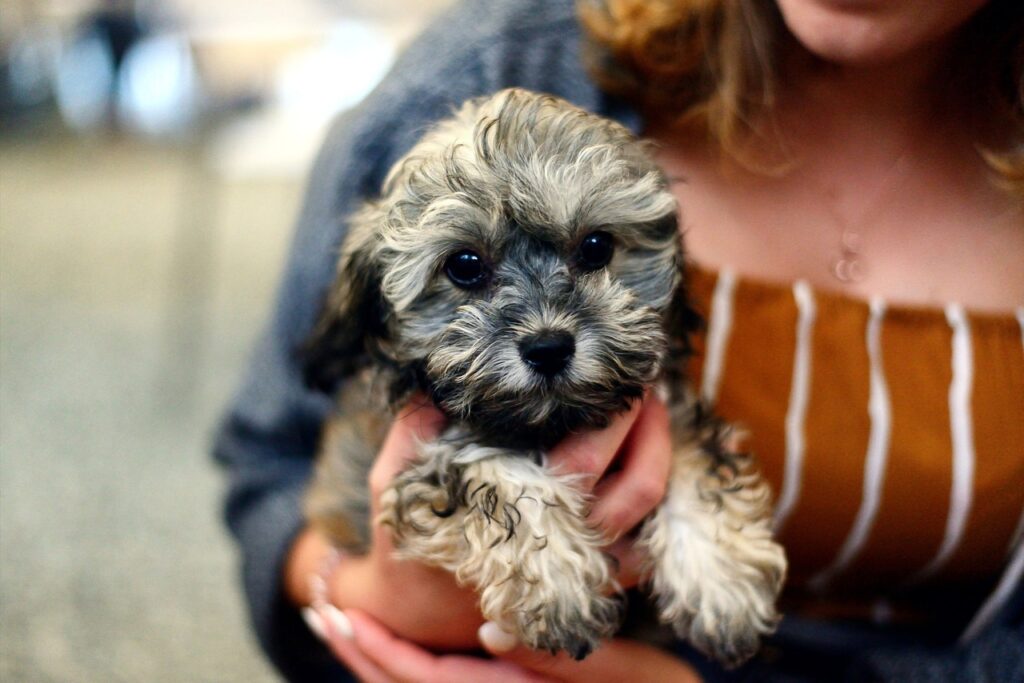
Bringing home a puppy for the first time is one of the most exciting decisions you can make in your life. However, not only does the anticipation of picking up your puppy bring eagerness and excitement but some anxiousness and doubt as well. You might be thinking to yourself “Am I ready to be a dog owner?”, “Am I prepared for all the responsibilities a dog entails?” “What do I need for a new puppy?” First off, if your thinking off any of these than you are going to be a great pet parent! And secondly, you came to the right blog! Puppies are a TON of work and require a lot of attention and care. In this blog we’ll cover the necessities and essentials for your new puppy!
-
Lets start with step one: Puppy proofing your home
So what exactly does “puppy proofing” mean? well, it’s kind of like baby proofing when, you make sure all sharp edges are covered and the open wall plugs are sealed. And so just like a baby, puppies are curious and will try to get in to anything and everything. This is why puppy proofing so important, to make sure Fido doesn’t choke on a loose coin or chew threw cords lying around. So, “How do you puppy proof?” Puppy proofing is a simple job to do that requires you to…
- Store away anything that can be deadly to your friend this includes cleaning products, some house and outdoor plants such as American Holly, Gladiola, and Amaryllis, and anything poisonous.
- Cover, tie, or put away loose cords that puppies can have easy access to.
- Look for anything that can be potentially dangerous or deadly.
- Lock or seal any cabinets that the pup could get into.
Two tips that might help. Tip #1 get down to your puppy’s height and search for anything that might look fun to chew, eat, or play with to your puppy that they shouldn’t, tip #2 set up baby gates to block entrances to certain rooms that you do not wish for your puppy to explore.
Great! Now that the house is nice and safe let’s talk about…
Step two: Planning ahead
Have you ever procrastinated about your homework for weeks and three days before the test you cram all your work in? Yeah, probably not the best idea when it comes to a living breathing animal. Before you take a new responsibility into you home your gonna have to do some planning and I’m gonna walk you through on how to do just that!
-
Start a puppy schedule
By doing this you begin start create a routine for yourself and slowly but surely you’ll begin to get familiar with it and helps if you accidently forget. A puppy schedule can include when you need to walk the dog, when it’s time for him to eat, playtime, training, naptime (yes puppies need to take naps) and you can add or take away whatever you like. You can also assign family members to do certain task such as ‘Susie can walk the dog on Sundays’ and ‘John can give the dog a bath on Wednesday’ It’s so much more organized and it will help to lighten the load.
And please don’t skip this next step
-
Make sure the whole family is ready to commit
This is the most important step. Remember puppies are a lot of work and require a bunch of care, love, training, and attention to become well behaved and socialized dogs. So make sure that the whole family knows what to expect from the dog such as It’s breed, size, temperament and if everyone is ready to commit to the new responsibility. DOGS ARE NOT TOYS and should NEVER be treated as such. Millions of dogs end up in shelters or abandoned because their owners weren’t ready for the responsibility, they were seen as accessories. or they were used as toys for their kids to play with. It’s a sad but true fact. Please don’t let your dog end up in a shelter. Do your research and make sure that you and your family is ready!
Well, now that you’ve puppy proofed your home, created a schedule, and know that everyone in your household is ready to take care of a dog it’s time to…
Step three: Go shopping
The step we’ve all been waiting for! This is the most exciting part of bringing home a puppy! but it can also get quite overwhelming for new owners. There are plenty of supplied to buy, such as leashes, crates, treats, and a lot more. To make it simpler, less overwhelming and a bit more fun we’ll cover these topics in categories. But, wait! Before we start shopping for the puppy their are a few things i want to cover first.
-
Remember that you are buying stuff for a dog and not you
I know this might sound a bit weird, but we do tend to pick things out because they are appealing to us. Take this as an example, if your just picking up random things because it’s “cute” or “it’s for a dog”. Don’t buy accessories before essentials. Remember, you are buying stuff for a dog and things might get torn easily, ruined quickly, or even get completely destroyed. When your out shopping for your dog, especially if it’s stuff your going to to use often (Like collars, leashes, poop bags, etc.) make sure that it’s durable and it will last for a long time. Necessities first, accessories after.
-
Think of the breed your getting
All breeds are very different and each have various needs. Because of this, be sure to search for supplies that fits your breed. For example, if your getting a dog bred for pulling/ hauling such as a husky, pulling on walks can be a major issue (especially since they are huge dogs) to fix this problem, try investing in special no pull leads and or harness’. The temperament, energy and maintenance level, size, even your lifestyle and living situation should all play a part in choosing the products. Remember, every little detail is essential and important for your dog and you to be happy and healthy and comfortable.
Now that we’ve gone over a few important things, let the spending begin!
-
Home sweet home: First night essentials
The first night together is definitely going to be a night to remember. The most important items we’ll cover are
- Crates and kennels
- Playpens
- Puppy pads / cleaning supplies
- Food and water bowls
- Dog beds and blankets
1. A Crate Or A Kennel
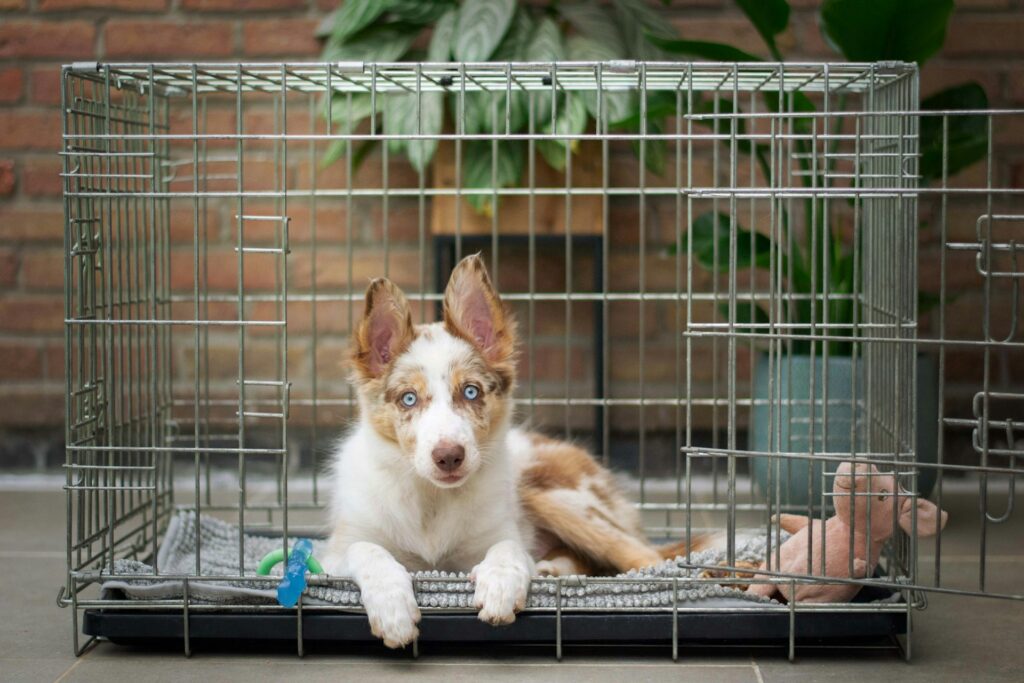
Dog crates and kennels are a must have for a new puppy. Not only does it provide some comfort in a new environment, but it’s also gives them a safe place to play or rest without you worrying about them getting hurt or chewing on the couch. So, why do we need crates and kennels? Well, aside from them being a safe place for the puppy it’s also important for crate training. The crate or kennel will be used quite often and it’s best to get them desensitized young.
Crates vs Kennels
Crates and kennels both pretty much do the same thing this is keeping your dog contained and safe, but they both have different attributes so let’s look at some!
Crates
Crates are pretty straight forward and generic. They are typically square, metal, and have sliding latch that locks on the side and can be pretty big depending on the breed. They are used by a lot of dog owners and are highly recommended. With that being said, lets look at some pros and cons.
Pros
- The metal bars prevent the puppy or dog from chewing through breaking loose.
- Crates can be used for potty training if you have a carpeted house.
- They can be used for easy travel.
- There is typically more space then a kennel.
Cons
- Depending on your living situation they might be to big.
- Not all dogs like the feeling of being displayed and might feel better if it was more den like.
- It might be a bit hard to travel with and some might not meet airline guidelines.
How much you might spend on a crate on average: 100$-330$ or more depending on the material, size, and the place you bought it from.
Plastic kennels
Kennels are also straight forward and generic, though instead of being metal they are made out of a hard plastic material. They also squared, but more den like with a single metal door with a latch that can lock and can be smaller than a crate. They are also used by dog owners though not as popular. Now, lets look at some pros and cons
-
-
DOGGY DISCLAIMER!: Kennels can vary in size, shape, and style but the description up top is just the generic kennel, the same goes for crates.
-
Pros
- Kennels are generally smaller than crates.
- They are more light weight and easier to travel with.
- They are easy to clean.
- Because it’s more den like it can make dogs feel more secure especially for anxious or reactive dogs.
- They can be collapsible.
- Some are approved by airlines.
Cons
- Kennels can get cold in cold weather
- Not very durable
- can be bulky
- May absorb smells
How much you might spend on a kennels on average: also around 100$-330$ or more depending on the material, size, and the place you bought it from.
Finding the perfect crate or kennel for you and your pup depends on several factors such as breed size, budget, living space, how much you travel, if you plan to use the crate for potty training, etc.
Doggy Disclaimer: Whether you choose a kennel or a crate, make sure your dog has enough space to stand up, turn around, and lay down with their front legs extended. Make sure to measure your dog’s height and measure the body length from nose to tail. To avoid accidents and eliminate extra space, most crates will have dividers so the crate will grow with your puppy.
Recommended Kennels and Crates from Amazon
1. Mirapet Portable Kennel
- Easy to travel with
- Simple collapsing mechanism for trouble free storage
- Effortless to clean
Price: $119. 95
2. Sport Pet Collapsible Kennel
- High quality
- Easy to assemble
- Portable and airline approved
- Lightweight
Price: $128.70
3. Diggs Evolv Dog Crate
- Secure crating
- Durable and long lasting
- Adaptable to space
- Airline friendly
Price: $200
(Prices vary by size)
Although crates and kennels are an essential item, it wouldn’t be fair to keep your pup locked up all day (NEVER do this). Luckily, there is a solution to keep Buster safe and out of the way without having to be locked in a kennel or crate.
2. Playpens